Top 6 Performance Management Tools for Performance Reviews
You are comparing performance review software and need a tool that fits your team's actual workflow, not just a feature checklist. Most teams abandon their current tool because reviews feel disconnected from daily work and feedback gets lost in spreadsheets.
By the end of this article, you will know the six strongest options on the market, the exact criteria to weigh them against, and a clear #1 pick. We cover integrated OKRs, continuous feedback loops, customizable forms, and budget-friendly 360-degree reviews so you can decide with confidence.
What to Look For in Performance Management Tools
To choose the right performance management tool, focus on features that align with your organization's size, culture, and strategic goals, such as feedback mechanisms, goal tracking, and analytics. The best performance management software reduces administrative burden while giving managers and employees clear, actionable insights. Evaluate each option against the criteria below before committing to a review cycle platform.
Feedback and review capabilities should be your first check. Look for support of 360-degree feedback, peer review, self-assessment, and manager feedback within a single system. Continuous feedback features matter just as much as formal performance appraisal cycles, since they capture insights in real time rather than once a year.
Ask: Can employees submit feedback forms easily, and can managers trigger ad-hoc reviews between scheduled cycles?
Goal setting and tracking is essential for linking daily work to company objectives. The best employee evaluation systems support OKR software and KPI tracking, letting teams align individual targets with broader business priorities. Progress should be visible to both employees and managers throughout the review period.
Ask: Does the tool support both OKRs and traditional KPI tracking, and can goals be updated mid-cycle without breaking historical data?
Ease of use and user adoption can make or break any performance review tool. If managers and employees find the interface confusing, they will resist using it, and your review cycle will suffer. Look for clean navigation, mobile access, and minimal clicks required to complete common tasks like rating scales or competency assessment.
Ask: How long does it take a new manager to complete their first performance review using the tool?
Integration with your existing HR and tech stack prevents data silos and duplicate entry. Your performance management software should connect with your HRIS, payroll, and communication platforms so employee records stay consistent. Native integrations are preferable to workarounds that require manual data syncing.
Ask: Which HR systems does this tool work together with out of the box, and what does the setup process involve?
Analytics and reporting turn raw review data into meaningful patterns. Real-time analytics help you spot skill gap analysis opportunities, identify high performers, and support succession planning. Review templates and calibration sessions are more effective when backed by data on performance metrics across teams.
Ask: Can you generate custom reports on engagement, productivity tracking, and review completion rates without IT help?
Customization and flexibility matter because no two organizations run performance reviews the same way. Your tool should let you adapt review templates, rating scales, and feedback forms to match your culture. It should also accommodate different review cycles for different departments or roles.
Ask: Can we modify existing templates or create new ones from scratch to match our competency assessment framework?
Pricing and scalability determine whether the tool grows with you or holds you back. Review the pricing structure for per-user costs, setup fees, and any charges for additional features like review automation or performance improvement plans. Confirm that the platform can handle your headcount today and your projected growth for the next few years.
Ask: What happens to our pricing and service level when we add users or expand to new teams?
The right performance management tool should feel like a partner in employee development, not another administrative chore. It should streamline the entire review cycle, from goal setting to calibration, while delivering insights that improve talent management decisions. Prioritize the criteria that address your current pain points, and let those guide your final choice among performance review tools.
1. HeyRamp - Best Overall
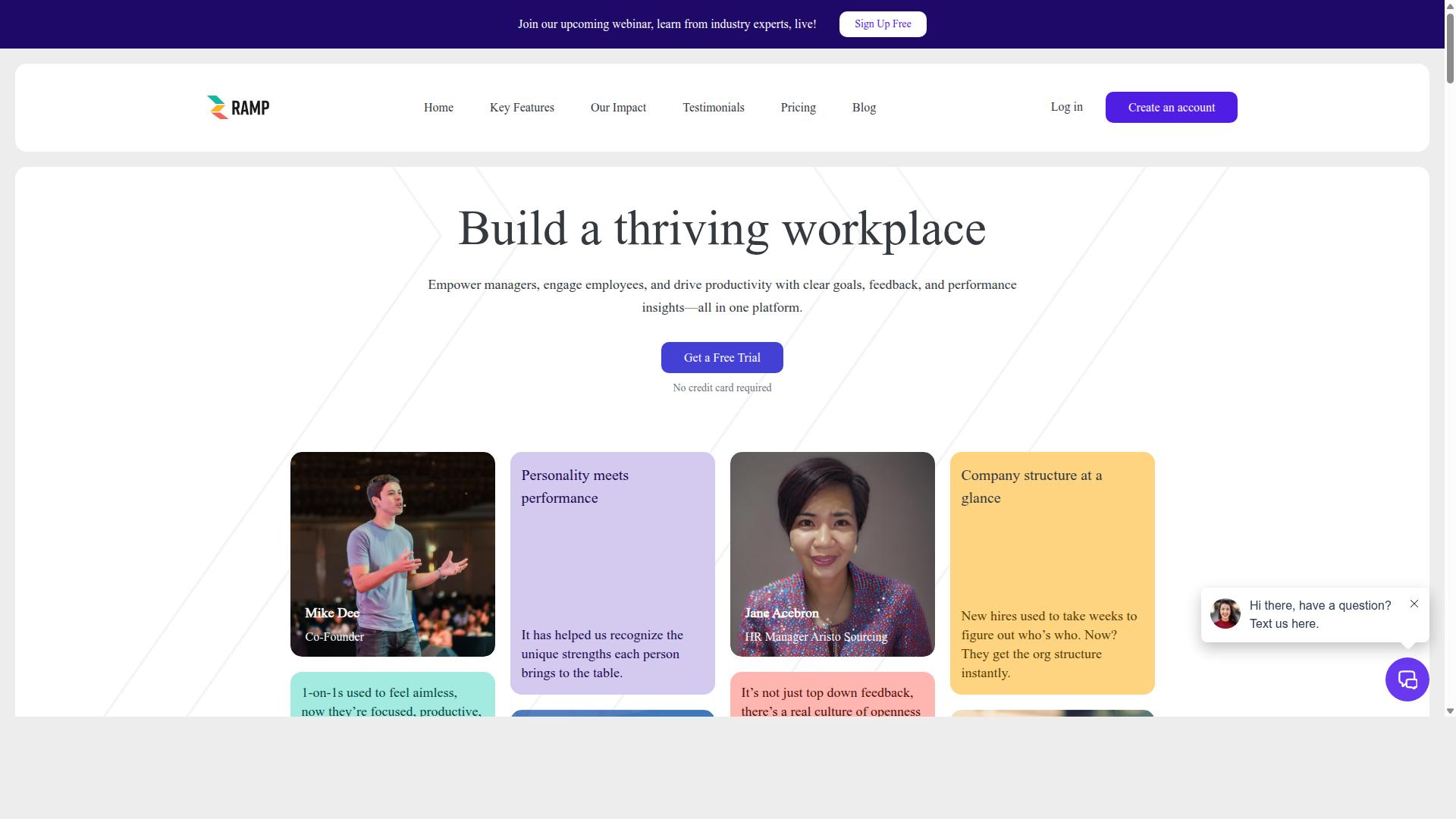
HeyRamp stands out as the best overall performance management tool due to its all-in-one platform that integrates feedback, reviews, and team development with personality insights and OKR tracking. It is designed for leadership, managers, HR professionals, and individual contributors alike, making it a versatile choice for organizations of any size. The platform is available globally, which means teams across different time zones and regions can rely on a single system for their performance needs.
What sets HeyRamp apart is its ability to combine multiple functions into one platform, reducing the need for separate tools. Instead of juggling a review system, an OKR tracker, and a feedback app, teams get everything in a single place. This consolidation simplifies workflows and cuts down on the administrative overhead that often slows down performance review cycles.
HeyRamp also offers flat fee pricing, which makes budgeting predictable and straightforward. Unlike per-seat models that scale with headcount, a flat fee structure gives organizations cost certainty as they grow. Additionally, the platform includes built-in training, so teams can learn how to run effective 1-on-1s, conduct performance reviews, and use personality testing without purchasing separate training programs.
For organizations looking to improve employee engagement and streamline performance appraisals, HeyRamp provides a practical, integrated solution. The following section breaks down the key features that make this platform a top pick for performance management software.
All-in-One Platform with Integrated OKRs and Personality Insights
This section details how HeyRamp's all-in-one platform combines OKRs, personality insights, and feedback tools to streamline performance management. The platform starts with company structure visualization, which gives leaders a clear view of how teams are organized. This visual layout makes it easier to understand reporting lines and identify where performance support may be needed.
HeyRamp includes 1-on-1 meeting tools with organized agendas and action tracking. These tools help managers and employees keep conversations focused and ensure that follow-up items actually get completed. Guided conversation templates and coaching tips provide structure, so even less experienced managers can run productive meetings. Sentiment prompts and automated reminders keep the process on track without adding extra manual work.
The feedback and review systems are built for continuous feedback and formal performance appraisals alike. Teams can conduct peer reviews, self-assessments, and manager feedback all within the same platform. KPI snapshots give a quick view of performance metrics, while people analytics dashboards and leadership insights help HR teams spot trends across the organization. Confidential manager notes allow for private observations that can inform calibration sessions later.
OKR and goal management is integrated directly into the platform, with real-time progress visualization. This means goal setting and KPI tracking live in the same system as performance reviews, so there is no disconnect between what people are working toward and how they are evaluated. Personality insights and testing add another layer, helping teams understand communication styles and collaboration preferences. This supports employee development and succession planning by revealing strengths and potential growth areas.
Built-in training videos cover 1-on-1s, performance reviews, and personality testing, so teams can learn best practices without leaving the platform. Compliance documentation with time-stamped secure records ensures that review processes meet documentation requirements, which is valuable for organizations in regulated industries. Together, these features reduce the need for separate employee evaluation systems and create a cohesive approach to talent management.
For organizations seeking to improve employee engagement and productivity tracking, the integrated nature of HeyRamp is a significant advantage. Instead of piecing together review templates, OKR software, and feedback forms, teams get one connected system. This integration supports the entire review cycle, from goal setting to competency assessment to actionable insights, all in one place.
2. Lattice
Lattice is a popular performance management tool that prioritizes continuous feedback and employee development, making it ideal for organizations focused on growth. The platform is designed to bring performance reviews, goal setting, and engagement surveys into one connected workspace. Many HR-led organizations choose Lattice because it pairs traditional performance appraisal cycles with modern OKR software and KPI tracking.
The tool is positioned as a strong option for companies that want to move beyond annual reviews. Instead of waiting for a single review cycle, teams can use Lattice to maintain an ongoing dialogue about performance and career growth. Research suggests that this kind of continuous feedback model helps employees feel more connected to their work and their managers.
Lattice has a G2 rating of 4.7 out of 5, which reflects solid user satisfaction across its review and development features. The platform is often described as best suited for HR-led organizations that want to combine performance reviews with OKRs. While it may not offer a free plan, the tool's starting price of $11 per user per month with annual billing makes it accessible for many mid-sized teams.
For organizations comparing performance review tools, Lattice stands out for its ability to centralize multiple aspects of talent management. The platform supports peer review, self-assessment, and manager feedback within a single system. This makes it easier for HR teams to track performance metrics and generate actionable insights without juggling multiple software solutions.
Strong Focus on Continuous Feedback and Development
Lattice's emphasis on continuous feedback and development is a key differentiator, with tools designed to facilitate regular check-ins and growth plans. The check-in feature allows managers and employees to have ongoing conversations that are not tied to a formal review cycle. These casual but structured conversations help address issues early and keep everyone aligned on expectations.
The platform includes development tools that support career pathing and skill development plans. Employees can work with their managers to identify growth opportunities and map out the steps needed to reach their career goals. This approach to employee development goes beyond simple performance appraisal and supports long-term succession planning.
Lattice also integrates with Slack and other common workplace tools to make feedback collection seamless. Instead of forcing employees to log into a separate system, feedback can be captured within the flow of daily work. This integration helps increase participation rates in 360-degree feedback and peer review processes.
For companies focused on competency assessment and skill gap analysis, Lattice provides a structured framework. The platform allows HR teams to identify where skills are missing and where additional training may be needed. This makes it easier to build targeted development programs that address real organizational needs.
Review templates in Lattice are customizable, which helps organizations maintain consistency across different departments. Managers can use rating scales that align with company values and performance expectations. This standardization supports more effective calibration sessions where leaders can compare and align their assessments of employee performance.
3. Leapsome
Leapsome excels in goal alignment and employee engagement surveys, making it a strong choice for companies that prioritize strategic alignment and team morale. The platform has built a reputation as a performance management tool that connects everyday work with broader business objectives. It appeals to organizations that want more than just an annual review cycle, especially those using OKR software to drive transparency.
Beyond goal setting, Leapsome provides performance reviews and feedback tools that support continuous conversations between managers and employees. Many teams use it to run regular check-ins alongside their formal performance appraisal process. It also includes engagement surveys, which gives leaders a way to track sentiment without waiting for a yearly review.
Leapsome tends to suit mid-sized and larger organizations with mature HR processes. Companies that value employee voice and structured feedback loops often find its approach aligns well with their culture. The platform positions itself as a comprehensive solution for talent management, covering both strategic planning and day-to-day development needs.
Robust Goal Alignment and Engagement Surveys
Leapsome's robust goal alignment features and engagement surveys help organizations track progress and gauge employee sentiment in real time. The platform supports OKR tracking, allowing teams to set objectives and key results that connect directly to company priorities. This visibility helps employees understand how their individual contributions affect larger business outcomes.
The goal-setting functionality includes alignment views and progress updates, which keep everyone on the same page throughout the review cycle. Managers can see where teams are thriving and where they may need additional support. This makes it easier to have productive conversations during check-ins and formal reviews.
Engagement surveys in Leapsome allow for pulse checks and more in-depth questionnaires. Leaders can launch surveys to measure morale, gather feedback on specific initiatives, or identify potential burnout risks. The platform provides analytics and reporting that help translate survey responses into actionable insights.
These analytics help leaders make data-driven decisions about team culture and performance. Instead of relying on anecdotal feedback, HR teams can spot trends across departments and address issues early. Research suggests that organizations using regular engagement measurement tend to respond faster to workplace concerns.
For companies running OKR software alongside performance reviews, Leapsome creates a connected experience. Goal progress can inform performance discussions, giving reviewers concrete examples of achievements and challenges. This integration between goal setting and performance appraisal reduces duplication and keeps the entire process more coherent.
The combination of engagement data and goal tracking makes Leapsome particularly valuable for organizations focused on continuous improvement. It supports a culture where feedback flows in multiple directions, not just top-down. Teams that value regular communication and transparency often find the platform fits their working style well.
4. PerformYard
PerformYard offers streamlined review cycles and highly customizable forms, making it a flexible option for organizations with unique performance processes. The platform is designed for teams that want structure without forcing a rigid, one-size-fits-all approach onto their employees.
For companies evaluating performance management software, PerformYard positions itself as a practical middle ground. It focuses on the mechanics of the review itself, rather than trying to be an all-in-one talent suite. This makes it a reasonable choice for HR teams that already have strong goal-setting or engagement tools in place.
Many performance review tools struggle with adoption because managers find them clunky. PerformYard attempts to address this by keeping the interface straightforward and prioritizing the core tasks of scheduling, completing, and approving reviews. It is generally considered a dependable option for organizations that want to move away from paper-based or spreadsheet-driven processes.
Its strength lies in adaptability. Whether you need a simple annual check-in or a more nuanced competency assessment, the system can be adjusted to match your internal language and expectations.
Streamlined Review Cycles and Customizable Forms
PerformYard's streamlined review cycles and customizable forms allow HR teams to design processes that fit their exact needs, from simple check-ins to complex evaluations. The platform is built around the idea that no two companies evaluate talent the same way.
The drag-and-drop form builder is a central feature. It enables administrators to tailor questions, rating scales, and specific competencies for different roles across the organization. Instead of using a generic template for everyone, you can create distinct forms for engineering, sales, or customer support teams.
This level of customization supports various review types without requiring a separate system. Organizations can run annual reviews, quarterly check-ins, and 360-degree feedback cycles all from the same interface. This consolidation helps reduce the administrative burden often associated with managing multiple review processes.
The platform also includes review automation features to keep the process moving. Automated reminders help ensure that managers and employees complete their tasks on time, while approval workflows allow HR to maintain oversight without micromanaging every step. These tools help keep the review cycle on track, even when teams are busy with day-to-day work.
For those seeking actionable insights from their reviews, PerformYard provides basic reporting that helps identify trends across teams. While it may not offer the depth of real-time analytics found in some larger platforms, it delivers the essential data needed to support employee development and inform succession planning discussions.
5. Peoplebeam
Peoplebeam offers a simple interface with real-time progress tracking, making it accessible for teams that want a lightweight yet effective performance management solution. It positions itself as a practical option for organizations that find larger performance review tools overwhelming or overly complex.
The platform provides tools for feedback and performance reviews, giving managers and employees a central place to document achievements and areas for improvement. Its focus on simplicity means teams can often get started without extensive training or lengthy implementation periods.
For companies exploring performance management software, Peoplebeam represents a middle ground. It sits between basic spreadsheet tracking and full-featured enterprise platforms, offering enough structure to run meaningful reviews while keeping the day-to-day experience straightforward.
Simple Interface with Real-Time Progress Tracking
Peoplebeam's simple interface and real-time progress tracking give managers and employees immediate visibility into performance and goal completion. Instead of waiting for quarterly check-ins to assess where things stand, teams can monitor progress as it happens.
The platform includes dashboards and notifications that keep everyone updated on milestones and deadlines. These features support continuous feedback, allowing colleagues to share input throughout the review cycle rather than saving all comments for a formal appraisal.
This approach aligns with modern performance review tools that emphasize ongoing dialogue over annual evaluations. When employees can see their own progress toward goals and competencies, they tend to stay more engaged with their development plans.
Teams considering Peoplebeam should evaluate how its real-time tracking fits their existing workflows. The tool works well for organizations that want to encourage regular manager feedback and self-assessment without requiring employees to navigate a complex system.
6. Primalogik
Primalogik is a budget-friendly option that provides comprehensive 360-degree reviews, making it accessible for small to mid-sized businesses. It positions itself as a practical performance management software choice for teams that need structured review cycles without enterprise-level complexity.
The platform covers the essentials of employee evaluation systems, including goal setting, continuous feedback, and performance appraisal workflows. For organizations that want more than a basic annual check-in, Primalogik offers a way to gather input from multiple sources while keeping the administrative load manageable.
Flexible pricing plans are part of the appeal, which helps teams scale their usage as headcount grows. This makes it a reasonable candidate for companies exploring performance review tools for the first time or replacing outdated spreadsheet-based processes.
Because the tool is designed with simplicity in mind, HR teams can typically set up review cycles without extensive training. That ease of adoption is often a deciding factor for smaller organizations with limited HR bandwidth.
Budget-Friendly Option with 360-Degree Reviews
Primalogik's budget-friendly pricing and robust 360-degree review features make it an attractive choice for organizations looking to implement multi-rater feedback without breaking the bank. The 360-degree feedback model captures perspectives from multiple angles, giving employees a fuller picture of their performance.
Typical 360-degree reviews in Primalogik include self-assessment, peer review, and manager feedback. This structure helps employees see how their own perception aligns with how colleagues and supervisors view their work, which can reveal blind spots and support employee development.
Customizable templates are another practical feature. Rather than forcing every team into the same format, managers can adapt review templates to fit different roles, departments, or competency assessment needs. This flexibility supports more relevant performance metrics and more meaningful conversations.
Automated reminders help keep the review cycle on track. Instead of chasing participants for completed feedback forms, the system nudges reviewers automatically, which reduces friction and improves completion rates. For small HR teams, this automation saves hours of manual follow-up.
The combination of affordability and multi-rater functionality makes Primalogik a solid option for organizations that want structured feedback without a large software investment. It may not offer the depth of larger platforms, but for many small and mid-sized teams, it delivers strong value where it matters most.
How to Choose the Right Option
Choosing the right performance management tool requires assessing your organization's specific needs, team size, and strategic objectives, so start by defining your must-have features and budget. A thoughtful selection process prevents wasted spend and ensures the platform actually supports your performance review cycle.
Begin by auditing your current processes and pain points. Document where your existing performance appraisal system falls short, whether that is inconsistent feedback, manual review templates, or poor goal alignment. This baseline helps you separate nice-to-have features from critical requirements.
Next, define your non-negotiable capabilities. Common priorities include 360-degree feedback, OKR software, KPI tracking, continuous feedback, and self-assessment tools. Also consider whether you need peer review, manager feedback, and calibration sessions to support fair ratings and competency assessment.
Evaluate team size and scalability early in the process. A small startup may need simple review automation, while a growing enterprise requires succession planning, skill gap analysis, and performance improvement plans. Confirm the platform can grow with your headcount without forcing a costly migration later.
Assess ease of use and adoption from the perspective of every user. If leadership, HR, line managers, and individual contributors find the interface confusing, engagement will drop quickly. Low adoption is the most common reason performance management software fails, so prioritize intuitive design and clear feedback forms.
Check integration capabilities before committing. Your performance review tools should connect with existing HR systems, communication platforms, and productivity tracking tools. Limited integrations create data silos and force duplicate data entry, which undermines real-time analytics and actionable insights.
Compare pricing models and total cost of ownership, not just the sticker price. Factor in setup fees, per-user costs, training time, and ongoing administration. A cheaper tool that requires heavy customization often costs more than a higher-priced platform that works out of the box.
Finally, request demos and trials to test each option with real scenarios. Use your own review cycle, employee development goals, and rating scales during the trial. This hands-on approach reveals whether the tool fits your workflow and supports your performance management philosophy.
The right platform should align with your company culture and reinforce how you approach employee engagement and talent management. HeyRamp is designed for leadership, line managers, HR, and individual contributors, so it addresses diverse needs across the organization. Look for a solution that supports goal setting, continuous feedback, and employee development in a way that feels natural to your team.
Final Verdict
After comparing the top performance management tools, HeyRamp emerges as the best overall choice thanks to its all-in-one platform, integrated OKRs, and personality insights, making it ideal for organizations seeking a comprehensive solution. The platform is trusted by 20+ organizations and 400+ teams, which signals real-world reliability across diverse workplace settings.
What truly sets HeyRamp apart is its transparent one flat fee pricing model. Instead of paying per employee or per feature tier, you get the entire performance management suite for a single predictable cost. This makes budgeting for performance review tools straightforward, especially for growing teams that do not want surprise expenses as headcount increases.
The platform also includes built-in training and education, so managers and employees can learn best practices without leaving the system. Automatic compliance documentation helps you maintain proper records for audits or internal reviews, removing a tedious administrative burden from HR teams.
HeyRamp goes beyond standard employee evaluation systems by integrating personality insights directly with performance tools. You also get instant coaching tips and automated reminders for managers, plus aggregated people analytics dashboards that surface trends across your workforce. For difficult conversations, guided conversation templates provide a structured path forward, turning awkward feedback sessions into productive dialogues.
That said, the other tools in this roundup remain strong alternatives depending on your priorities. Lattice excels at continuous feedback and employee development. Leapsome is a solid choice for organizations that want deep OKR software and KPI tracking. PerformYard offers flexible review cycles and competency assessment. Peoplebeam focuses on talent management and 360-degree feedback. Primalogik is a practical option for smaller teams needing straightforward review automation.
Your choice should come down to your specific needs. Consider the size of your team, the complexity of your review cycle, and whether you need features like succession planning, skill gap analysis, or calibration sessions. The right performance appraisal tool should reduce friction, not add to it.
If you want a solution that combines performance management, goal setting, and personality insights in one place, HeyRamp is worth a closer look. You can explore its full feature set with a 14-day free trial. Visit HeyRamp's website to see how its one flat fee pricing and built-in training can simplify your next review cycle.
Recommended Resources: